
Redtail vs Wealthbox vs Salesforce for RIAs


Choosing between Redtail, Wealthbox, and Salesforce as your RIA's CRM is one of the most consequential technology decisions you will make.
Your CRM touches every client interaction, every compliance workflow, and every piece of documentation a regulator might request.
Pick the wrong platform, and you face months of migration headaches, broken integrations, and gaps in your audit trail.
Pick the right one and your team operates faster, your data stays clean, and your compliance posture strengthens.
The best CRM for your firm depends less on features and more on how well the platform fits your team size, tech stack, compliance obligations, and growth trajectory.
This guide walks you through the practical tradeoffs between Redtail, Wealthbox, and Salesforce from the perspective of RIA operations, security, and long-term cost.
It goes beyond surface-level pricing comparisons to address integration risks, vendor oversight, audit readiness, and migration planning.
If you want a partner who understands how CRM choices intersect with SEC and FINRA compliance, cybersecurity controls, and tools like Orion, eMoney, and Microsoft 365, Secure Wealth IT offers a free compliance readiness assessment at (704) 769-3663 to help you evaluate where your technology stack stands today.
Key Takeaways
Your CRM decision should be driven by team size, integration requirements, and compliance readiness rather than feature lists or pricing alone.
Redtail suits budget-conscious small firms, Wealthbox fits growing mid-size RIAs, and Salesforce serves enterprise teams with dedicated IT resources.
Every CRM migration introduces data, security, and compliance risks that require careful planning, vendor oversight, and documentation.
How RIAs Should Evaluate a CRM

A CRM for financial advisors is not a generic sales tool.
It is the operational backbone that connects your contact management, client service workflows, compliance documentation, and reporting.
The right advisor CRM should reduce friction in daily work while strengthening your regulatory posture.
Core Use Cases in an Advisory Firm
Your CRM handles more than storing phone numbers.
In practice, you rely on it for:
Client and household management. Tracking relationships, accounts, beneficiaries, and household groupings.
Activity documentation. Logging calls, meetings, emails, and notes that form your books and records.
Task and workflow coordination. Assigning and tracking onboarding steps, review prep, and service requests across your team.
Compliance evidence. Maintaining time-stamped records that prove you followed your own policies during an audit.
Every one of these functions directly affects your ability to respond to a FINRA or SEC examination.
What Matters More Than Feature Lists
Demo screens look great.
Real-world adoption is what counts.
Pay attention to how quickly your team can actually use the system without constant support.
As noted in a 2026 comparison from Revisor Group, a tool that "won't dazzle but won't confuse you" can outperform a more powerful platform that It's $99your staff avoids using.
Focus on integration depth with your existing custodians and planning tools, not just whether a connection exists on a marketing page.
Questions to Ask Before Comparing Vendors
Before you schedule a single demo, answer these:
How many users need access, and will that change in the next three years?
Which custodians, portfolio tools, and planning software must connect seamlessly?
What compliance documentation do you currently produce manually?
Who on your team will own CRM administration and training?
What is your tolerance for a complex implementation versus a simpler rollout?
These answers narrow your CRM shortlist far more effectively than any feature checklist.
Platform Fit at a Glance
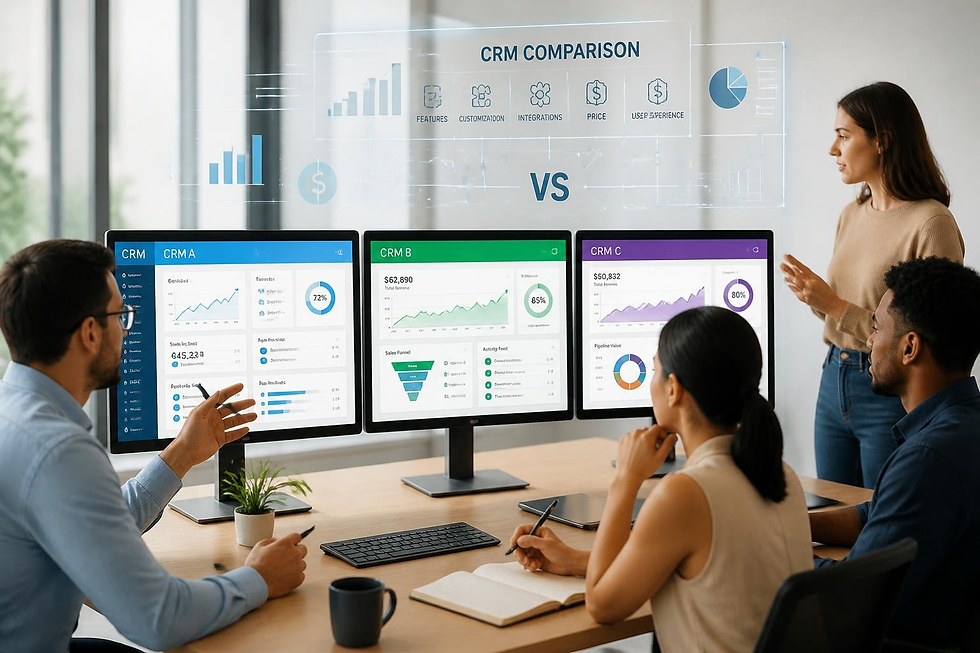
Redtail, Wealthbox, and Salesforce each serve a different type of RIA well.
The differences come down to team size, customization needs, and how much IT support you have available.
Here is a quick comparison before the detailed breakdown.
Factor | Redtail CRM | Wealthbox CRM | Salesforce Financial Services Cloud |
Best for | Solo and small RIAs | Growing small-to-mid firms | Enterprise and multi-office firms |
Pricing | $99/month per database, unlimited users | $45 to $319/month based on users | ~$225+/month per user |
Ease of use | Simple, slightly dated | Modern, intuitive | Powerful, steep learning curve |
Customization | Limited | Moderate | Extensive |
Minimal | Minimal to moderate | Significant |
Where Redtail Fits Best
Redtail CRM works well if you are a solo advisor or a small team that wants a dependable, affordable CRM with proven financial integrations.
It's $99/month flat-rate pricing for unlimited users, which makes budgeting easy.
The interface is straightforward, even if it feels a bit dated.
You will not need an IT specialist to run it.
Where Wealthbox Fits Best
Wealthbox CRM is a strong choice for small-to-mid-size RIAs that want a modern interface and room to grow.
Its drag-and-drop workflow tools make onboarding and review processes easier to standardize.
Pricing scales by user count, which stays competitive for teams under ten.
Where Salesforce Fits Best
Salesforce Financial Services Cloud is built for larger firms that need deep customization, advanced automation, and enterprise-grade reporting.
The platform can do almost anything, but it requires dedicated administrative resources and a meaningful budget for implementation and ongoing management.
How Team Size and Complexity Change the Decision
A five-person RIA does not need Salesforce's complexity.
A 50-advisor firm will likely outgrow Redtail.
Match the platform to where your firm is now and where it will realistically be in three to five years.
Migrating CRMs is expensive in time, data risk, and compliance disruption, so it pays to plan.
Daily Workflow, Usability, and Adoption

The CRM your team actually uses every day is the one that produces value.
A system with great features that sits idle because it is too complex to navigate is worse than a simpler tool that your staff uses consistently.
Workflow automation, contact management, and team visibility are the areas where these three platforms diverge most.
Client Notes, Tasks, and Contact Management
All three platforms handle basic contact management well, but the experience differs.
Redtail uses a traditional contact record layout with tabs for notes, activities, and documents.
It is familiar to long-time users.
Wealthbox takes a cleaner approach.
Its contact records feel less cluttered, and adding notes or tasks is fast.
For teams that resist CRM adoption, this simplicity matters.
Salesforce gives you the most control over what fields and layouts look like, but you need to configure that upfront.
Out of the box, Financial Services Cloud can feel overwhelming without proper setup.
Activity Feeds, Collaboration, and Team Visibility
Wealthbox stands out with its activity stream, which works like a social media feed for your team.
You see client interactions, task completions, and updates in real time.
This creates transparency without requiring everyone to dig into individual records.
Redtail logs activities reliably but does not offer the same at-a-glance team visibility.
Salesforce provides robust activity tracking and reporting, but pulling meaningful team views often requires custom dashboards or reports.
Workflow Automation and Process Standardization
Workflow automation separates good CRM usage from great CRM usage.
Redtail offers basic workflow templates that cover common processes like client onboarding.
These work well for repetitive tasks but lack branching logic.
Wealthbox provides customizable workflows with an intuitive builder.
You can create multi-step processes without technical skill, which helps smaller teams standardize service delivery.
Salesforce offers the deepest automation capabilities, including multi-step logic-driven workflows that auto-update records and trigger notifications across systems.
As detailed platform comparison notes, this power comes with significant setup and maintenance costs.
Customizable Workflows for Reviews, Onboarding, and Service Requests
Annual reviews, new client onboarding, and account service requests are the workflows RIAs use most.
Ask yourself:
Can you build a repeatable onboarding checklist with assigned tasks and deadlines?
Does the workflow notify the right people at each step?
Can you track completion for compliance documentation?
Wealthbox handles these well for teams up to about 15 users.
Salesforce excels when you need dozens of workflow variations across multiple departments.
Redtail covers the basics without much room for customization.
Integrations, Data Flow, and Tech Stack Alignment

Your CRM does not operate in isolation. It must connect reliably with your custodial platforms, portfolio management tools, financial planning software, and communication systems.
A broken or incomplete integration creates manual data entry and increases error rates. It also weakens your compliance documentation.
Connections With Orion, eMoney, Tamarac, and Custodians
Redtail integrates deeply with Orion, Black Diamond, Schwab, and other core custodial platforms. These connections are mature and well-tested.
If your tech stack is traditional and stable, Redtail's plug-and-play integrations work without much effort.
Wealthbox connects with Orion, eMoney Advisor, Riskalyze, Schwab, and Fidelity. Its integration library continues to expand.
For firms using newer fintech tools, Wealthbox tends to add support faster than Redtail.
Salesforce connects with virtually everything through its AppExchange marketplace and API framework. Tamarac, Orion, eMoney, and all major custodians have Salesforce integrations.
Many of these require configuration, third-party middleware, or developer support.
Microsoft 365, Email Sync, and Calendar Considerations
Email and calendar sync is a daily necessity. Redtail supports Microsoft 365 integration for email logging and calendar sync, though setup can feel manual.
Wealthbox offers Wealthbox Mail, a built-in email tool that syncs conversations directly to client records. It also integrates with Microsoft 365 and Google Workspace.
This makes email documentation easier without leaving the CRM.
Salesforce integrates with Microsoft 365 through add-ins and third-party connectors. The experience varies depending on your Salesforce edition and configuration.
Firms running Microsoft 365 across their organization should test email sync thoroughly before committing.
When Native Integrations Are Enough
If your firm uses a standard stack of one custodian, one portfolio tool, and one planning platform, Redtail or Wealthbox's native integrations will likely meet your needs. Native connections are simpler to maintain and less prone to breaking during software updates.
When an Open Ecosystem or Custom Build Matters
If your firm runs multiple custodians, proprietary tools, or needs data flowing between systems in custom ways, Salesforce's open API and AppExchange give you the most flexibility.
This is where firms with dedicated IT resources or an IT partner familiar with financial tools, such as a provider experienced with Orion, eMoney, Tamarac, and Microsoft 365, gain a real advantage in keeping integrations secure and functional.
Compliance, Security, and Operational Risk

This is where most CRM comparisons fall short. Your CRM stores sensitive client data, houses documentation that regulators will request, and creates access points that must be controlled.
Treating CRM selection as purely an operational decision without weighing compliance and security implications puts your firm at risk.
Books and Records, Audit Trails, and Documentation Readiness
SEC and FINRA require you to maintain books and records that demonstrate your advisory activities. Your CRM should automatically log changes, time-stamp entries, and retain historical records.
Redtail and Wealthbox both maintain activity logs, but the depth of audit trail detail varies.
Salesforce provides granular field-level audit history and detailed login tracking, which is valuable for larger firms facing more complex examinations.
Make sure whichever platform you choose produces reports you can hand directly to an examiner without hours of manual compilation.
Access Control, MFA, and Data Protection Considerations
Multi-factor authentication is a baseline requirement. All three platforms support MFA, but your implementation matters more than the feature's existence.
Consider:
Can you restrict data access by role (advisors see their clients, operations sees everything)?
Does the platform enforce password complexity and session timeouts?
Can you revoke access instantly when an employee leaves?
Salesforce provides the most granular permission controls. Wealthbox and Redtail offer role-based access, but with less configurability.
Regardless of platform, your firm needs clear access management policies enforced at the IT level.
Vendor Risk, Cybersecurity Oversight, and Business Continuity
Your CRM vendor is a third-party risk. You should evaluate their data encryption standards, incident response procedures, backup practices, and SOC 2 compliance.
If your CRM vendor suffers a breach, your client data is at stake.
Ask each vendor:
Where is client data stored, and how is it encrypted?
What is the disaster recovery plan and recovery time objective?
How are security incidents communicated to customers?
This vendor risk evaluation should be part of your firm's broader cybersecurity oversight program, aligned with SEC and FINRA expectations.
How CRM Choice Affects SEC and FINRA Preparedness
A CRM that produces clean audit reports, maintains detailed activity logs, and integrates with your compliance documentation workflow makes examination prep straightforward. A CRM with gaps in any of these areas forces your compliance team to fill holes manually, which increases error risk.
Firms that work with a compliance-aware IT partner like Secure Wealth IT can benefit from having audit-ready documentation, access control policies, and vendor risk assessments already in place before regulators come knocking.
Implementation Effort, Migration Risk, and Total Cost

Switching CRMs is one of the most disruptive projects an RIA can undertake. The platform's sticker price is only part of the equation.
Data migration, staff training, integration reconnection, and the risk of losing compliance records during the move all contribute to the true cost.
Data Cleanup and Mapping Before a Move
Before migrating, you need to audit your existing CRM data. Duplicate contacts, inconsistent field formatting, and orphaned records will carry over to your new system unless you clean them first.
Map your current data fields to the new platform's structure and identify any data that does not have a direct equivalent. This step alone can take weeks.
Skipping it guarantees problems on the other side.
Training Burden and Change Management
Redtail has the lowest training burden. Most advisors can start using it within a day or two.
Wealthbox is similarly approachable, with an intuitive interface that reduces onboarding friction.
Salesforce requires the most training investment. Budget for formal sessions, ongoing coaching, and a dedicated administrator.
Without proper training, adoption drops, and your team reverts to spreadsheets and email, which defeats the purpose.
Pricing Models Versus Long-Term Administrative Cost
Here is a simplified cost comparison:
Platform. | Base Cost | Admin Overhead | Hidden Costs |
Redtail | $99/month (unlimited users) | Low | Storage overages |
Wealthbox | $45 to $319/month (by user count) | Low to moderate | Costs rise with team growth. |
Salesforce | ~$225+/month per user | High | Customization, third-party apps, premium support |
As a detailed pricing analysis shows, Salesforce's costs escalate quickly once you add customizations, integrations, and support packages. Redtail's flat rate stays predictable.
Wealthbox falls in between.
Common Migration Pitfalls for RIAs
The most frequent mistakes during CRM migrations include:
Losing historical notes or activity logs that serve as compliance evidence.
Breaking integrations with custodians or portfolio tools during the transition.
Failing to test data accuracy after import.
Underestimating the time staff need to learn new workflows.
Not updating compliance policies to reflect the new system's capabilities.
Working with a partner who understands both the technical migration process and the compliance implications helps you avoid these pitfalls.
An IT provider experienced with financial tools and SEC/FINRA requirements can oversee the move, validate data integrity, and ensure your audit trail remains intact.
Decision Framework for Choosing the Right Platform

Selecting between Redtail, Wealthbox, and Salesforce comes down to matching the platform to your firm's size, growth plans, IT capacity, and compliance complexity. Use the framework below to guide your evaluation.
Best Match for Solo and Small RIAs
If you are a solo advisor or a team of fewer than five, Redtail or Wealthbox will serve you well without unnecessary complexity. Redtail's flat pricing makes it the most affordable option if you have a small team that may grow.
Wealthbox's modern interface and activity stream make daily use more enjoyable and improve adoption.
Both platforms connect with common custodians and planning tools out of the box.
Best Match for Growing Multi-Advisor Teams
For firms with 5 to 25 users that expect continued growth, Wealthbox offers the best balance of usability, workflow automation, and integration flexibility. Its pricing scales predictably, and the customizable workflows handle the added complexity of multiple advisors sharing a client base.
Redtail can work at this size, but many advisors on forums like Reddit report hitting limitations with customization and reporting as their teams grow.
Best Match for Enterprise Customization Needs
If your firm has 25+ advisors, multiple office locations, or complex reporting requirements, Salesforce Financial Services Cloud is the strongest option. Its customization depth, enterprise-grade security controls, and open API support the complexity of large operations.
Budget for a dedicated Salesforce administrator or a qualified consulting partner. Without one, the platform's power goes unused.
When to Prioritize Simplicity, Flexibility, or Control
Use this decision guide:
Prioritize simplicity if your team resists technology, your budget is tight, or you need to be operational quickly.
Choose Redtail.
Prioritize flexibility if you want modern workflows, a clean interface, and room to grow without committing to enterprise infrastructure.
Choose Wealthbox.
Prioritize control if you need granular permissions, logic-driven automation, and the ability to customize every aspect of the system.
Choose Salesforce.
No CRM eliminates the need for sound IT governance, cybersecurity controls, and compliance oversight.
Make sure your broader technology environment supports your chosen platform with proper access management, encrypted backups, and audit-ready documentation.
Next Steps for Your RIA or Broker-Dealer Firm
Secure Wealth IT helps Registered Investment Advisors, broker-dealers, and financial advisors stay secure, compliant, and audit-ready. Explore these free tools and resources:
Free Financial Calculators: calculator.securewealthit.com
Compliance Self-Assessment Tool: regulations.securewealthit.com
Resource Library: Browse free RIA and broker-dealer guides
Watch on YouTube: Secure Wealth IT YouTube channel
Talk to a Specialist: Schedule a free consultation
For more information about this topic, visit us at https://www.securewealthit.com


Comments